
Payroll is one of the most crucial parts of running a business—but let’s be honest, it can also be one of the trickiest. If you’re a Payroll Master, accountant, or a business owner handling a team, understanding payroll processing in the Philippines can save you time, stress, and costly mistakes in the future.
Here, we’ll break down everything you need to know so you can run payroll smoothly—whether you do it manually, with a system, or through an outsourced payroll service.


Understanding Payroll Processing
Payroll processing is more than just handing out paychecks—it’s a structured system that ensures employees are paid accurately and on time while keeping your business compliant with government regulations. It covers the entire journey of compensation, starting from calculating an employee’s total earnings, applying the correct deductions, and distributing their salaries, all the way to reporting and filing the necessary documents with government agencies.
Key Stages of Payroll Processing
Before anything else, payroll processing involves three major phases:
1. Pre-payroll activities – This phase focuses on preparing everything needed before payroll runs, including employee registrations, payroll schedules, and system setup.
2. Actual payroll processing – This is the core stage where salaries are computed, deductions are applied, and payments are processed.
3. Post-payroll activities – The last phase involves finalizing payroll records, generating reports, and submitting mandatory filings to keep your business fully compliant.
Let’s break them down:


1. Pre-Payroll Activities
Employer Registration
Before your business can legally pay salaries and process payroll, it must first be properly registered with key government agencies. This ensures that your company complies with labor and tax laws while giving employees access to essential benefits.
Your business should be registered with the following:
• Bureau of Internal Revenue (BIR) – to secure your Tax Identification Number (TIN), which is required for withholding and remitting employee income tax.
• Social Security System (SSS) – for employee pension, disability, and other government-mandated benefits.
• PhilHealth – for employee health insurance contributions.
• Pag-IBIG Fund – for housing and savings benefits.
Employee Enrollment
In addition to employer registration, each employee must also be enrolled in these same agencies for their tax deductions and contributions. This includes collecting and recording the following information:
- Tax Identification Number (TIN)
- SSS Number
- PhilHealth Number
- Pag-IBIG Number
- Bureau of Internal Revenue Form 1902 (for new hires)

Payroll Structure
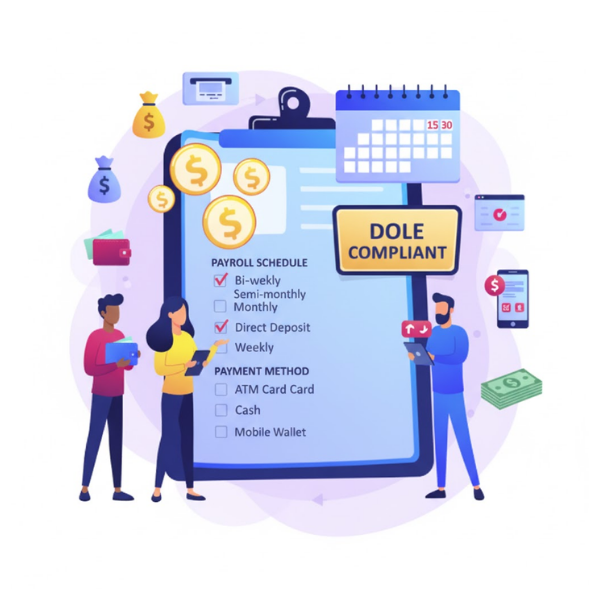
This defines when and how employees will receive their salaries. It should also be fully compliant with the Department of Labor and Employment (DOLE) labor laws.
Start by setting up an accounting payroll schedule—most businesses in the Philippines use a bi-weekly or semi-monthly schedule, but you can also schedule it monthly or weekly.
You’ll also need to decide on the payment method—whether it’s direct bank deposit, payroll ATM cards, mobile wallets, or cash. To make payouts faster and easier, use a payroll system that integrates with banks. For example, PayrollPlus automates direct deposits by securely transferring salaries from your payroll account to employees’ bank accounts — eliminating the need for manual encoding.
Establishing this structure early on ensures payroll runs smoothly and consistently every pay cycle.
Payroll System Setup
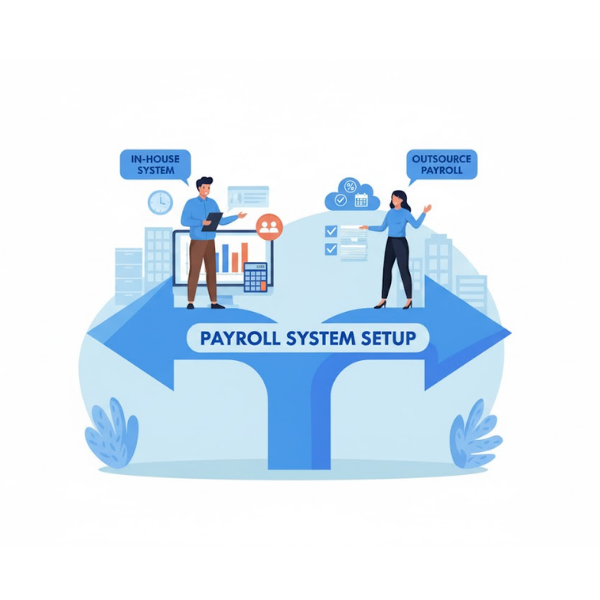
The next important step is setting up a reliable payroll system. This determines how payroll will be calculated, processed, and recorded every pay cycle.
You have two main options to consider:
- Invest in a localized payroll system – Ideal for companies with dedicated HR or accounting staff. This allows full control over payroll data, customization of processes, and immediate access to records. However, it requires proper software, training, and strict compliance with tax and labor regulations.
- Outsource payroll to a service provider – A convenient option for businesses that want to save time and ensure accuracy. Outsourcing reduces administrative workload, helps maintain compliance with government requirements, and often includes automated tax filing and reporting.
Selecting the right payroll system depends on your company’s size, available resources, and operational priorities.
2. Actual Payroll Processing
This is where the numbers come in.
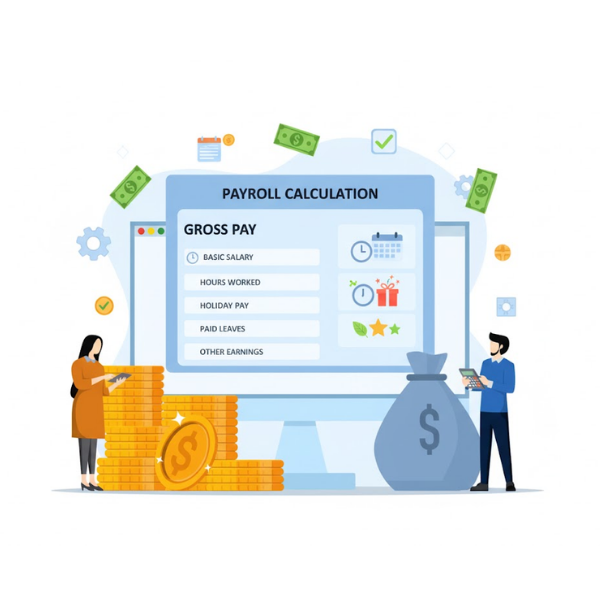
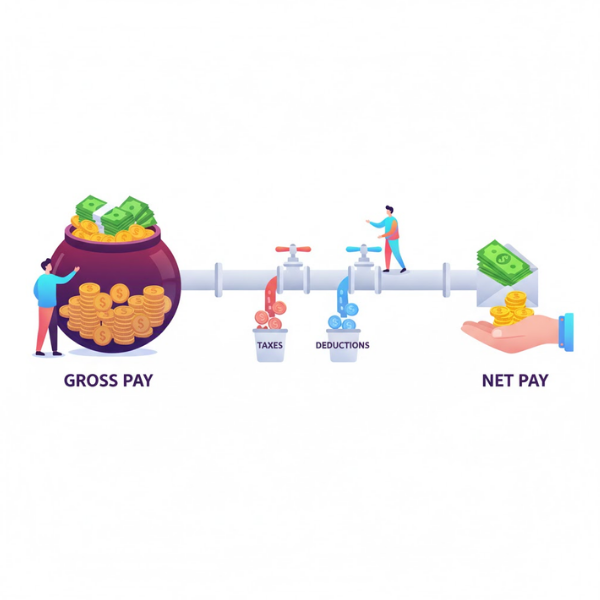
Gross Pay Calculation
This includes all regular and additional compensation, such as:
Basic salary – based on agreed hourly, daily, or monthly rates.
Hours worked – regular working hours rendered.
Overtime pay – calculated based on applicable premium rates.
Holiday pay – pay for regular and special non-working holidays, including premium rates if the employee works on these days.
Leaves – whether paid, unpaid, or converted to cash.
Other earnings – allowances, commissions, incentives, or bonuses.
Deductions and Taxes
Once gross pay is determined, the next step is to compute mandatory and authorized deductions, some of which are based on the employee’s salary bracket including:
Withholding Taxes – following BIR tax tables.
Government contributions – SSS, PhilHealth, and Pag-IBIG deductions.
HMO or insurance – if applicable.
Authorized deductions – such as company loans, salary advances, voluntary contributions, or other approved payments.
Net Pay
Finally, net pay represents the employee’s take-home pay after all deductions are applied:
Net Pay = Gross Pay – Total Deductions
3. Post-Payroll Activities
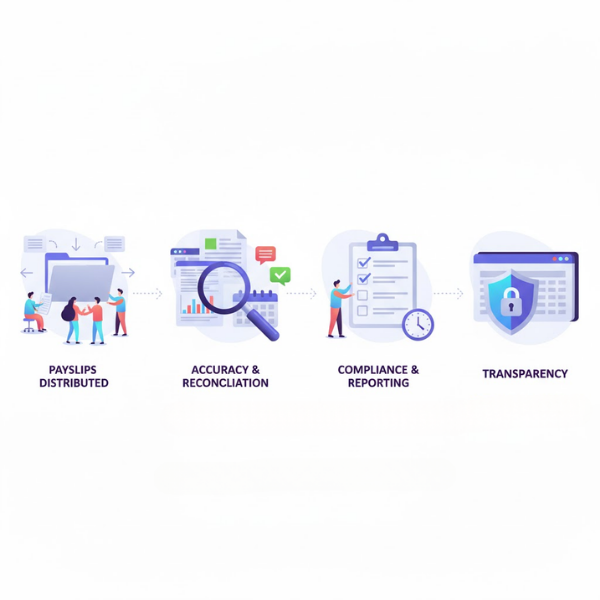
Once salaries have been released, it’s equally important to complete the necessary post-payroll tasks to ensure accuracy, transparency, and compliance.
Payslip Distribution
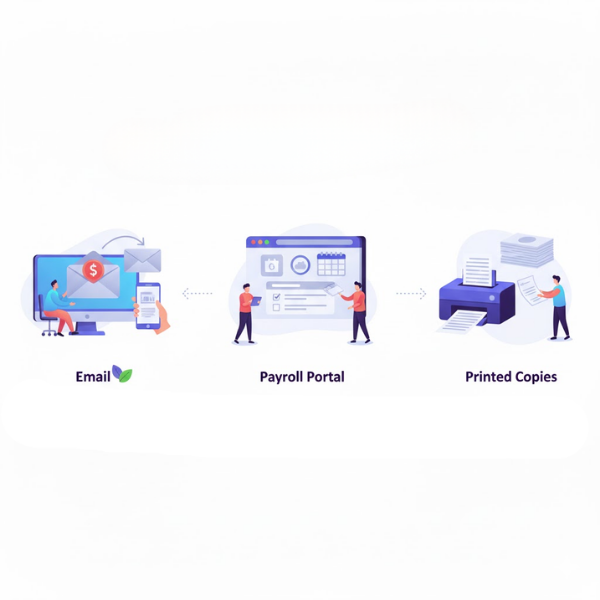
Every payroll run must be accompanied by a payslip, which provides employees with a clear breakdown of their earnings and deductions. Employers can distribute payslips through:
Email – a fast and eco-friendly option.
Payroll portals or HR systems – allows employees to access their payslips anytime.
Printed copies – still common in more traditional workplaces.
`
Tax & Compliance Reporting
Our efficient seating arrangements and real-time communication between staff reduce wait times and enhance service quality, ensuring that customers enjoy their meals promptly and with fewer errors. This coordination by optimizing table management and systematizing kitchen operations, leads to happier diners making every visit memorable.


Maintain Payroll Records
Strong payroll documentation not only protects your business legally but as an employer, you are also required to:
Keep payslips, tax filings, and proof of contribution remittances for at least 10 years.
Maintain organized and secure payroll records to support audits and resolve payroll disputes.
When is it time to upgrade your payroll process?
Setting up and managing payroll can be challenging, and certain issues are clear indicators that it’s time to review and improve your current system. Common red flags include:
- Frequent errors in payslips and deductions – Incorrect computations or missing details can lead to employee frustration, and time-consuming corrections.
- Delays in salary distribution – Late payroll releases can affect employee morale and damage trust in the organization.
- Missed deadlines for remittance and reporting – Failure to submit contributions and taxes on time can result in penalties and legal consequences.
- Difficulty tracking attendance and overtime – Manual tracking can lead to miscalculations and disputes over work hours and pay.
- Inconsistent payroll records and employee disputes – Disorganized records make it harder to resolve concerns quickly and comply with audits or inspections.
If your business is facing any of these challenges, it’s a strong sign that your payroll process needs optimization—whether through automation, better systems, or outsourcing to trusted experts.

Smart Ways to Improve Payroll Processing
Payroll optimization is all about making your payroll process smoother and easier to manage. By automating tasks and staying on top of requirements, you can save time, avoid errors, and make sure everyone gets paid on time—without the stress. Here are a few practical ways to make your payroll operations more efficient:
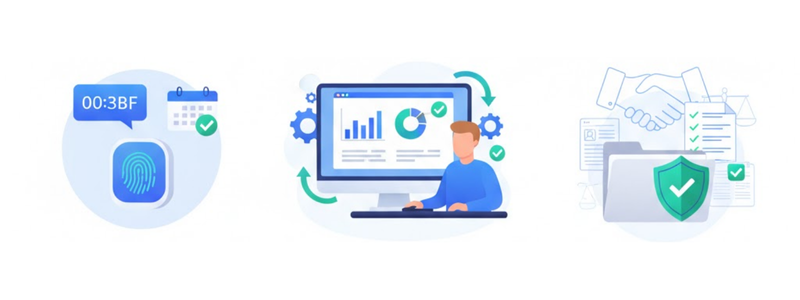
Use a reliable time tracker – Accurately records employees’ work hours, overtime, and leaves for precise payroll calculations and minimizing disputes. Consider using time tracking systems that are modern yet convenient, like ZKTeco’s fingerprint and face recognition devices.
- Invest in payroll software – Speeds up payroll processing by automating computations for salaries, deductions, and government contributions.
- Consider outsourcing payroll – If your team lacks the time or expertise, partnering with a trusted payroll service provider like Mustard Seed Systems Corporation can improve accuracy, compliance, and efficiency.
- Stay updated with labor and tax regulations – Regularly monitoring updates from DOLE and BIR ensures that your payroll remains fully compliant with Philippine laws.
- Keep payroll records organized and secure – Proper documentation protects your business during audits, prevents errors, and allows for quick resolution of employee concerns.
Payroll Processing Made Easy with PayrollPlus
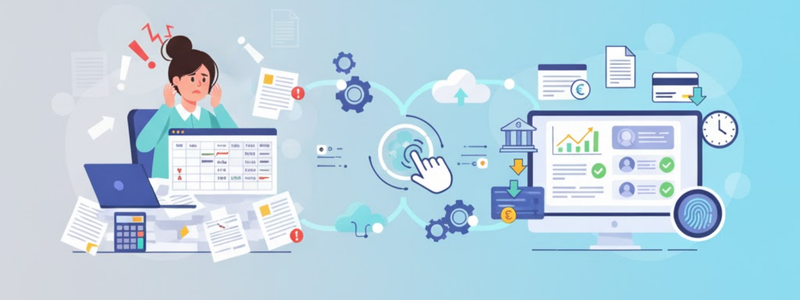
A modern payroll solution can make your entire payroll process a lot smoother. Instead of juggling spreadsheets and manual calculations, everything’s automated and organized in one place. PayrollPlus is your all-in-one solution for payroll and HRIS in the Philippines. Whether you’re running a small business or a growing company, this payroll software makes it easy to track attendance, customize modules, automate payroll, and sync data between systems.
Here’s what PayrollPlus can do for you:
- Payroll Software Management – Automatically takes care of salary computations, deductions, and government contributions—so you can say goodbye to stressful manual calculations.
- Loan Management – Effortlessly tracks employee loans and repayments, with automatic deductions built right into the payroll system.
- Absence Management – Keeps an accurate record of leaves and absences, and syncs it directly with payroll to make sure payouts are always spot on.
- Time & Attendance Management – Integrates with high technology biometrics or digital timekeeping systems to capture work hours, overtime, and shifts—making payroll fast, easy, and reliable.
With PayrollPlus, you get more than just a payroll tool—you get a complete HR and payroll solution designed to help your business work smarter and grow faster.
Final Thoughts
Payroll processing in the Philippines doesn’t have to be a headache.
Once you understand the steps, use the right tools, and stay on top of requirements,
paying your employees accurately and on time becomes so much easier – every payday.
Whether you handle payroll yourself or work with a provider, having a smooth and reliable system
helps you save time, stay compliant, and keep your employees happy.
Frequently Asked Questions
Payroll processing is the process of calculating employee salaries, deductions, taxes, government contributions, and net pay while ensuring compliance with Philippine labor laws and BIR, SSS, PhilHealth, and Pag-IBIG requirements. It includes pre-payroll preparation, payroll computation, salary disbursement, and post-payroll reporting.
Payroll processing consists of three major stages:
- Pre-payroll: Employee registration, government enrollment, payroll schedule, and payroll system setup.
- Payroll processing: Salary computation, overtime, holiday pay, deductions, and tax calculations.
- Post-payroll: Salary release, government remittances, payroll reports, and recordkeeping.
Before processing payroll, employers should prepare employee records, attendance data, salary details, employment status, tax information, and government membership numbers for BIR, SSS, PhilHealth, and Pag-IBIG. Accurate attendance records are also essential for correct payroll computation.
Employers are required to deduct:
- Withholding Tax (BIR)
- SSS contributions
- PhilHealth contributions
- Pag-IBIG contributions
- Authorized deductions such as loans or salary advances when applicable.
Attendance records determine regular hours, overtime, undertime, absences, holiday pay, and leave credits. Accurate timekeeping helps prevent payroll errors, employee disputes, and compliance issues. Many businesses use biometric or digital timekeeping systems to automate attendance tracking.
Common payroll mistakes include incorrect salary computations, outdated tax and contribution tables, inaccurate attendance records, delayed payroll processing, incorrect holiday pay, and late government remittances. Automating payroll significantly reduces these errors.
Payroll software is generally more efficient than manual payroll because it automates salary computation, statutory deductions, payroll reports, and compliance updates. It reduces human error, saves time, and improves payroll accuracy.
PayrollPlus by Mustard Seed Systems automates payroll computation, attendance integration, overtime, holiday pay, statutory deductions, loan management, leave tracking, payroll reports, and bank payroll file generation. It helps businesses process payroll faster while maintaining compliance with Philippine regulations.
Yes. Payroll software helps employers stay compliant by automatically calculating taxes, government contributions, holiday pay, overtime, and generating reports required for BIR, SSS, PhilHealth, and Pag-IBIG submissions.
Businesses looking for an automated and localized payroll solution can use PayrollPlus by Mustard Seed Systems. It supports payroll automation, attendance integration, statutory compliance, employee self-service, and payroll reporting, making it suitable for SMEs and growing organizations.